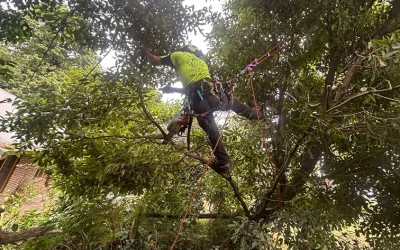
Carpenter Ants in Your Trees: The Warning Sign You Can't Afford to Ignore
Written by John McKenna, Feb 27, 2026
For homeowners across Melbourne, seeing a swarm of large insects pouring out of a tree trunk usually triggers instant panic. The first instinct is understandable: "It's termites, and my house is next." However, the reality is often quite different.
This guide to identifying wood-nesting ants and assessing structural tree decay is written by John McKenna, Head Arborist and Director of Tree Range Arborists. John has over 15 years’ experience in tree health and hazard management across Eastern Melbourne and the Dandenong Ranges.
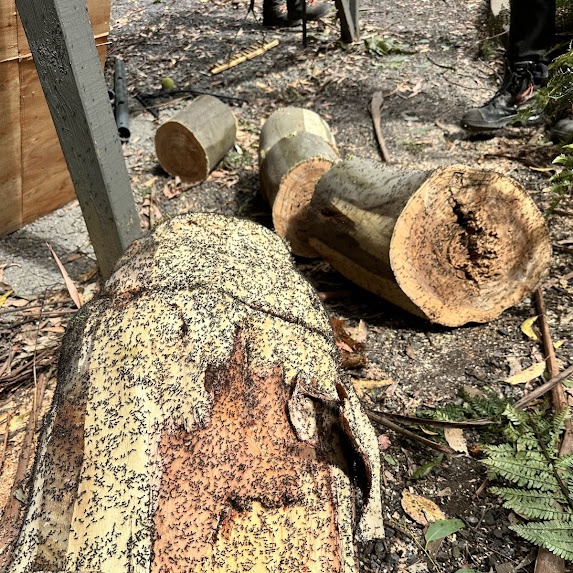
As you can see in a recent photo taken above by our arborists in the field, those aren't termites. They are likely Carpenter Ants, and while they aren't actively eating your tree to death, they are telling a story about the tree's health that you absolutely cannot afford to ignore.
Is It Termites or Ants? Don't Assume—Identify First
Before you rush to phone a pest controller, take a step back and make sure you know what you're looking at. In Victoria, confusing termites (white ants) with wood-nesting ants is extremely common, but their behaviours and the risks they pose are worlds apart.
The Melbourne Mix: Carpenter Ants vs. White-Footed House Ants
Working across local areas from Frankston to the Dandenongs, we regularly see two main types of ants colonising trees:
- Carpenter Ants (Camponotus species): These are the main culprits you'll find in hollow limbs. They vary in size within the same colony and range from black to orange-brown. As native Australian insects, Carpenter Ants are natural scavengers that prefer damp, decaying wood.
- White-Footed House Ants (Technomyrmex albipes): Smaller and much more of a nuisance, these black ants with pale "feet" form massive super-colonies. In Melbourne suburbs, the White-Footed House Ant notoriously takes over tree hollows and travels along branches to invade roof cavities in search of moisture and food scraps.
How Do Arborists Distinguish Between Termites and Ants?
Looking at insect activity, it is usually clear to a professional whether they are dealing with ants or termites. Here is how you can tell at a glance:
- Daylight Activity: Termites hate light and open air. If you break open a log, you'll see them scrambling for cover instantly. Carpenter ants, on the other hand, are confident and active out in the open.
- Body Shape: Ants have a classic "wasp waist" (a pinched section between the thorax and abdomen) and elbowed antennae. Termites look more like pale, thick grains of rice without that defined waist.
- The Debris: Termites build "mud tubes" to travel safely. Ants leave behind "frass"—a sawdust-like material kicked out of their nesting galleries. If you see piles of wood shavings at the base of a tree, you can be confident ants are the culprit.
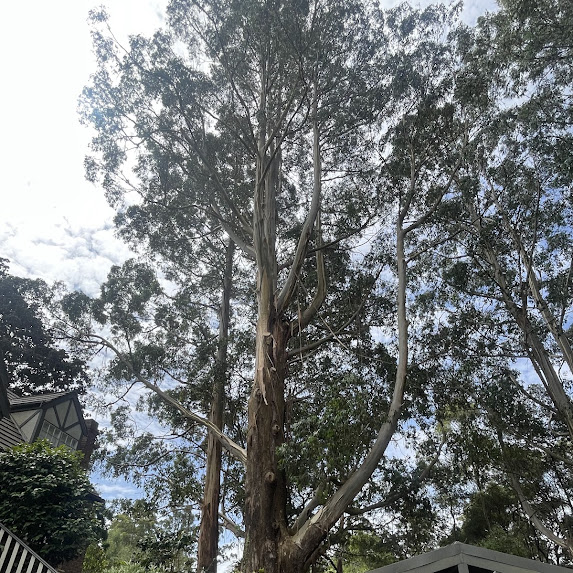
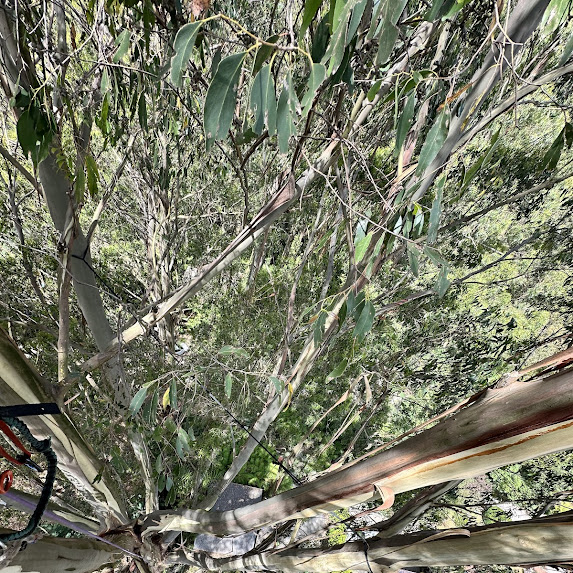
To give you an understanding of just how big this ant nest was – it occupied most of this giant gum tree and was visible from the highest branches down to the ground!